South Asian Therapy in California, Illinois & New York
My practice is currently full. I'm keeping a waitlist and will reach out personally as space opens.

You Didn't Grow Up Being Told to Talk About Your Feelings.
You grew up being told to work hard, be grateful, and make your parents proud. Therapy wasn't something people in your family did. There was always something more important to handle first.
So you handled it. Because that's what you've always done.
And now you're here. Which means some part of you knows that handling it isn't enough anymore.
Family and belonging
Duty, guilt, in-law dynamics, and the pressure to make everyone proud.
Achievement and exhaustion
Perfectionism, overthinking, burnout, and the cost of always being the capable one.
Boundaries and choice
Making room for your own voice without treating your values or culture as the problem.
It’s not just work stress.
There’s a particular kind of pressure that comes with being South Asian and high-achieving in America.
It's being the proof that your family's sacrifice was worth it. It's the model minority myth whispering that you should be succeeding effortlessly. It's the aunties doing a quiet inventory of your life at every family gathering. It's the guilt that arrives the second you try to rest, say no, or choose yourself.
It's carrying two cultures and never fully belonging to either.
And doing all of this while looking completely fine.

The cycle can look successful from the outside and exhausting from the inside.
Most clients don’t reach out because everything has fallen apart. They reach out because they’re tired.
What started as motivation became exhaustion. What started as responsibility became resentment. What started as wanting to make everyone proud became feeling like your worth depends on how much you achieve, help, or hold together.
The cycle can change without losing the parts of you that matter.
Your cultural context belongs in the work
South Asian mental health can include family duty, intergenerational expectations, in-law dynamics, relationship pressure, and the loneliness of being the dependable one. You should not have to spend every session explaining why a boundary can feel like betrayal.
Arati brings culturally responsive, mindfulness-based, and depth-oriented care to the patterns beneath anxiety, perfectionism, burnout, and people-pleasing. The work can honor where you come from while making more room for who you are becoming.
Depth, not just another list of coping skills.
- Understanding the pressure of being the proof that your family’s sacrifice was worth it.
- Mindfulness and Buddhist psychology to develop self-compassion, emotional awareness, and a different relationship with difficult thoughts and feelings.
- Somatic and nervous-system work to move out of survival mode.
- IFS-informed, depth-oriented work to explore protective patterns shaped by guilt, family expectations, and the pressure to perform.
- Boundaries, family conflict, dating, marriage pressure, identity, and belonging.
- A life that feels authentic and sustainable rather than driven by obligation.
Common Challenges for South Asian Women
Be successful, but not intimidating. Be independent, but not too independent. Put yourself first, but don't disappoint anyone.
Many South Asian women come to therapy feeling responsible for everyone else's comfort while quietly neglecting their own needs.
If that sounds familiar, you already know the contradiction. Clients often come in carrying:
- People-pleasing that started so early it doesn’t feel like a choice
- Burnout from being everyone’s first call and nobody’s
- Dating and marriage pressure — from “don’t look at boys” to “why aren’t you married yet?”
- Caretaking that was supposed to be temporary and somehow became permanent
- Boundaries that get read as disrespect
- Guilt for choosing yourself, even in small ways
If you've spent years being everyone's steady one, this is where that ends.
Why Therapy Has Felt Hard to Access
If you've avoided therapy until now, that makes complete sense.
In many South Asian families, mental health struggles are private matters. Therapy can feel like admitting failure, or worse, something that might get back to people. There's often no language for what you're experiencing, no model for what asking for help even looks like.
Research bears this out: South Asian Americans are among the least likely communities to seek mental health support, largely due to cultural stigma and a shortage of culturally competent providers. Read the research
And even if you've tried therapy before, you may have spent half the session explaining your family structure. Why certain expectations feel impossible to push back on. Why "just set a boundary" lands differently when your whole family's sense of honor is wrapped up in your choices.
You deserve better than spending half your session on backstory.
Get in Touch13
years in practice
7,000+
sessions completed
CA · IL · NY
licensed states
Pacifica
faculty
Gujarati
spoken here
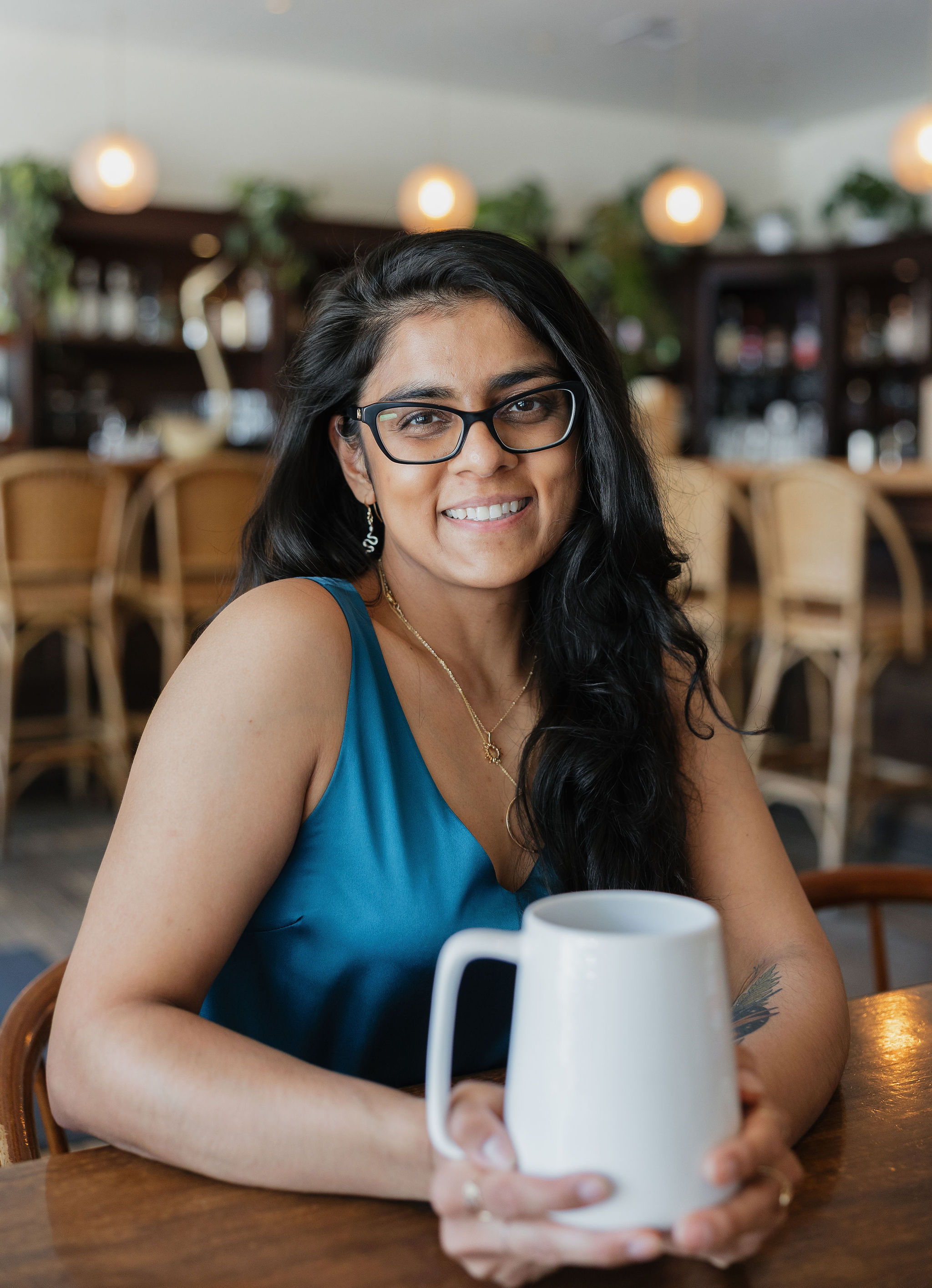
About Arati Patel, LMFT
I'm Arati Patel, MA, LMFT, licensed in California (#105734), Illinois (#166.001662), and New York (#002678). I've been in practice since 2013.
As a first-generation South Asian American and Gujarati-speaking therapist, I understand the pressure to look fine while carrying much more than people can see: the weight of family expectations, cultural identity, and the quiet exhaustion of always being the capable one. Sessions are honest, direct, and grounded in your actual life.
Trusted perspectives on mental health and relationships.
“I didn't have to give her a whole backstory. She already understood where I was coming from. She got my culture, my family, and the pressure I've felt my whole life. It was such a relief to just talk and be myself.”
More on south asian mental health therapy.
Honor Where You Come From Without Losing Yourself.
- Feeling understood without explaining your entire family structure.
- More clarity around what is yours to carry and what is not.
- The ability to honor your culture without disappearing inside it.
- Less guilt when you rest, say no, or make a different choice.
- Greater ease in relationships, boundaries, work, and self-worth.
Your context belongs in the room.
I’m South Asian, first-generation, and Indian American. I understand izzat without needing it explained, and I understand the difference between a boundary and a betrayal in a South Asian family context. This is not about rejecting your family or culture. It is about finding freedom within it.
Frequently Asked Questions About South Asian Therapy
Who This Is For
This work is a good fit if you're:
- South Asian or Indian adults navigating cultural pressure and personal wellbeing
- First- and second-generation adults balancing multiple cultural identities
- South Asian women experiencing burnout, people-pleasing, or caretaking fatigue
- South Asian men carrying achievement, provider, or family pressure
- Adults navigating dating, marriage, and family expectations
- Professionals struggling with anxiety, perfectionism, or burnout
You Can Honor Your Roots Without Losing Yourself.
You don't need to have everything figured out before reaching out. A free 15-minute consultation is a chance to share what you're looking for, ask questions, and see whether working together feels right.
IN-PERSON IN VENTURA, CA · ONLINE THROUGHOUT CA, IL & NY